
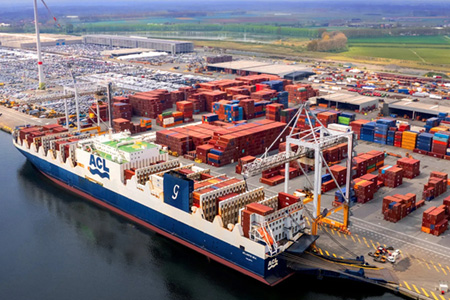
Against this backdrop, one figure stands out. ACL Atlantic Container Line has never lost a single container at sea in over 40 years of operation.That is not a marketing claim dressed up in statistics. It is a verifiable operational record that no other North Atlantic carrier can match.
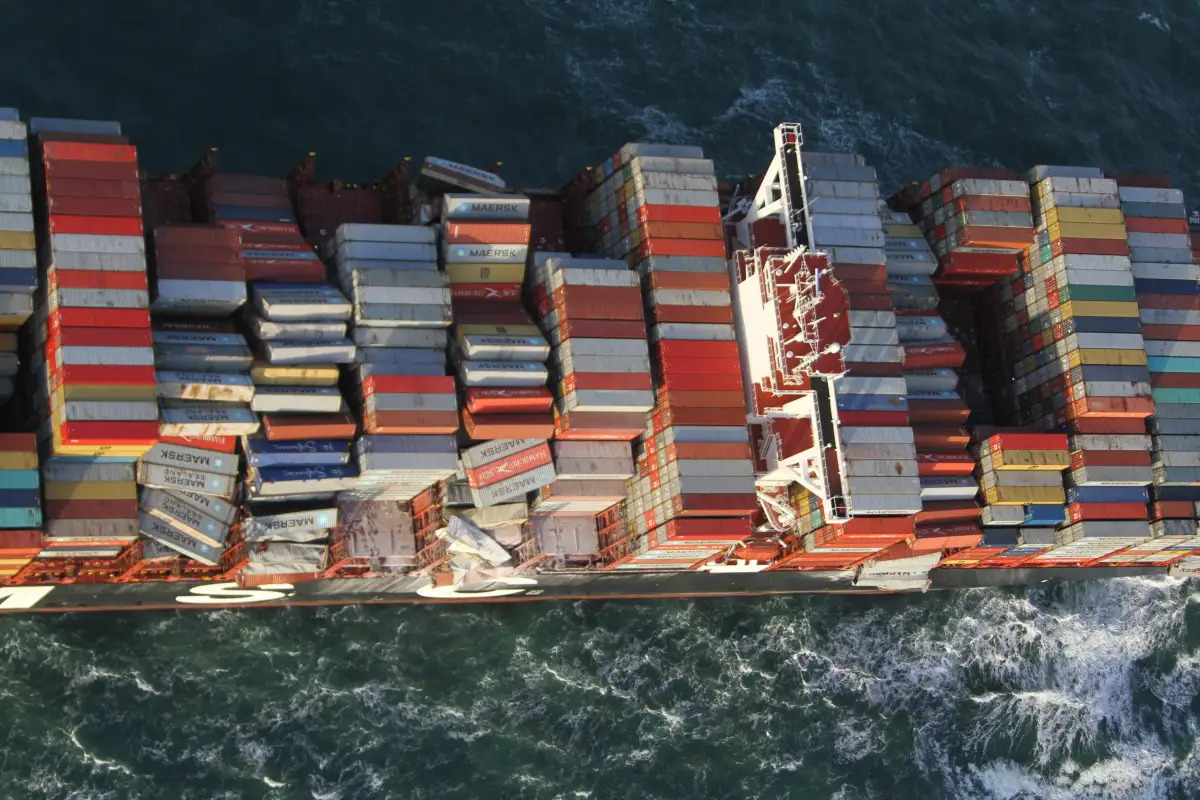
The reason comes down to engineering. ACL is the only North Atlantic carrier whose entire fleet is equipped with permanent steel cell guides both above and below deck. This is the critical distinction. On a conventional container vessel, cell guides the steel frameworks that hold containers in position are fitted below deck. Above deck, containers are secured using lashings. Those lashings can and do fail in extreme conditions. When they fail, containers go overboard.
On an ACL vessel, there are no deck lashings. Every container, at every level of the stack, sits within a permanent steel cell guide racking system. The containers cannot move. They cannot be dislodged by wave action, roll, or pitch. In over four decades of North Atlantic crossings one of the most demanding ocean environments on earth their system has never failed.
ACL operates scheduled services between the United Kingdom, Northern Europe, and North America, with sailings from key UK and European ports serving the US East Coast and Canada. For businesses moving goods across the North Atlantic in either direction ACL offers a combination of schedule reliability, cargo safety, and engineering integrity that is simply not replicated elsewhere on this trade lane.
The North Atlantic is not a forgiving environment. It is the very route where weather losses are most frequently recorded. Choosing a carrier whose entire fleet is engineered to handle those conditions is not a premium decision. It is the sensible one.
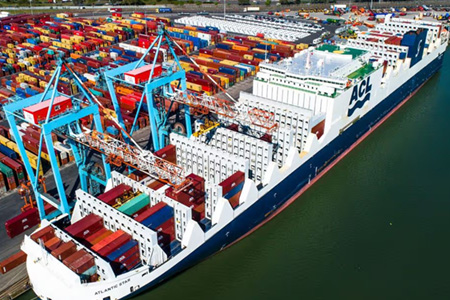
At SARR Logistics, we work with ACL as part of our sea freight offering for transatlantic shipments precisely because their record speaks for itself. When we recommend a carrier to a client, we are putting our own reputation behind that recommendation. ACL makes that straightforward, not only from a safety aspect but from a timely one as well. ACL are the only shipping line to offer a weekly sailing from the UK to USA in ten days or less, that is a huge advantage if you need your good to arrive in time.
According to the World Shipping Council’s research programme on containers lost at sea, extreme weather events and fire remain the leading causes of cargo loss, and improving container safety requires sustained effort across the entire supply chain. You can read the full WSC 2026 report at worldshipping.org.
 Contact our experienced team at [email protected] or call 0333 224 1 224 to discuss how our comprehensive logistics services support your supply chain risk management requirements. We understand that effective protection requires both strategic planning and operational excellence across all freight forwarding disciplines.

How many containers are lost at sea each year?
According to the World Shipping Council’s 2026 report, 1,478 containers were lost at sea in 2025 out of approximately 280 million transported globally. This is equivalent to 0.0005 percent of all containers moved but the losses are concentrated in a small number of major incidents.
What causes containers to fall overboard?
The main causes are severe weather, particularly in the North Atlantic and North Pacific, fire related incidents, and the failure of conventional deck lashings under extreme sea conditions. Larger vessels with higher deck stacks are at increased risk.
What is a cell guide racking system?
A cell guide is a permanent steel framework that holds a container securely in position. ACL is the only North Atlantic carrier to fit cell guides both above and below deck across its entire fleet, eliminating the need for deck lashings that can fail in heavy weather.
Has ACL ever lost a container at sea?
No. ACL has recorded zero containers lost at sea in over 40 years of operation an unmatched safety record on the North Atlantic trade lane.
How do I book transatlantic freight through SARR Logistics?
Contact our sea freight team on 0333 224 1224 or at [email protected]. We will assess your requirements, advise on the right sailing, and manage your shipment from booking through to delivery.