

SARR Logistics UK Our Blog News People with questions about sea, air road, rail and Blog Logistics

Middle East Conflict: 5 Critical Impacts on Global Freight

Middle East Conflict burning Flag

Middle East Conflict: How the Strait of Hormuz Is Reshaping Trade

The Middle East conflict has entered its most serious phase yet. On 28 February 2026, coordinated military strikes by the United States and Israel on Iran triggered immediate retaliation from Tehran. Within hours, the world’s most strategically important maritime waterway the Strait of Hormuz had effectively closed. The impact on global freight is immediate, significant, and still developing.

At SARR Logistics, we are monitoring this situation around the clock. This blog sets out exactly what has happened, what it means for your shipments, and what you can do about it.

What Is the Strait of Hormuz?

The Strait of Hormuz sits between Iran and Oman at the entrance to the Persian Gulf. At its narrowest point it is just 33 kilometres wide. Yet through this corridor passes roughly 20% of the world’s daily oil supply and 11% of all global maritime trade volume. Every day, over 20 million barrels of crude oil transit this waterway, serving Saudi Arabia, Iraq, Kuwait, the UAE, and Qatar.

There is no viable alternative route in or out of the Persian Gulf. When the Strait of Hormuz closes, cargo has nowhere to go.

What Has Happened to Ocean Freight?

The Middle East conflict triggered a near total collapse in strait transits within 48 hours. By 1 March 2026, vessel movements through the chokepoint had fallen by over 80% compared to the previous week. The world’s largest shipping lines Maersk, MSC, Hapag Lloyd, CMA CGM, and COSCO all suspended transits and instructed vessels in the region to proceed to safe shelter immediately.

Jebel Ali Port in Dubai, the world’s largest artificial harbour, temporarily suspended operations following a fire caused by debris from an aerial interception. DP World confirmed a precautionary shutdown before partial operations resumed on 2 March.

The shipping disruption compounds an already difficult environment. The Houthi forces in Yemen announced the resumption of commercial shipping attacks on 28 February 2026, forcing all major carriers to suspend Suez Canal passage as well. Vessels that would previously have transited the Red Sea are now rerouting around the Cape of Good Hope adding approximately 3,500 nautical miles and around one million US dollars in fuel costs per voyage.

That cost does not stay with the carrier. It moves directly to the shipper as surcharges.

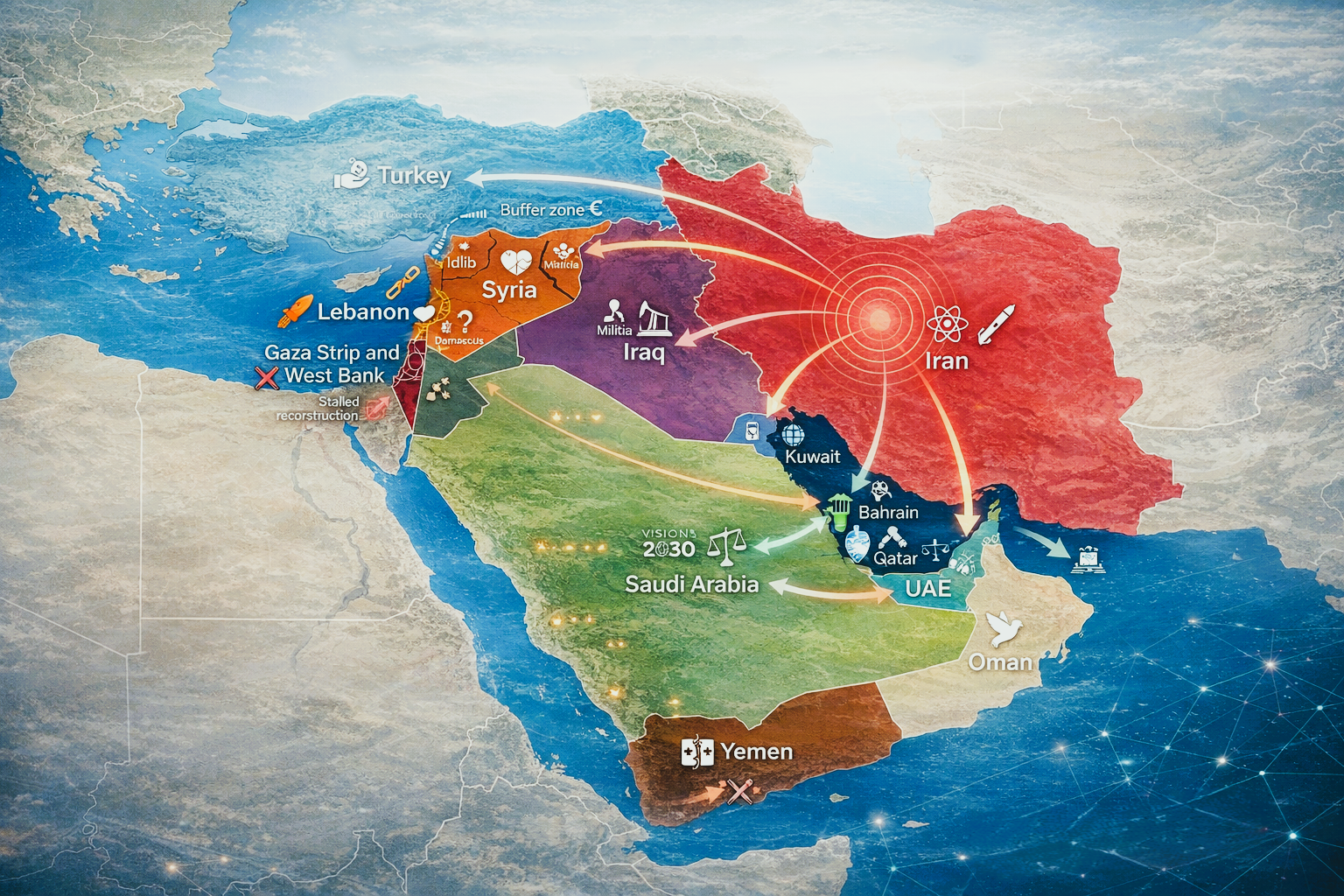
Map showing Conflict in Middle East

What Has Happened to Air Freight?

The Middle East conflict has also struck air freight hard. Large portions of Middle Eastern airspace remain closed or severely restricted. Airlines have suspended services to and from the affected region, and Emirates SkyCargo has halted bookings entirely.

The deeper problem is hub capacity. Many long haul services between Asia and Europe route through Middle Eastern hub airports particularly Dubai. The loss of these transhipment connections has created an immediate capacity shortage on Asia to Europe air freight lanes. Prices on these routes have already begun rising sharply, with global freight analysts reporting tightening availability on time critical shipments.

What Does This Mean for UK Businesses?

This shipping disruption is not limited to businesses trading directly with the Middle East. The effects are spreading across global freight routes and cost structures.

Oil prices have climbed by approximately 10% since the conflict escalated, with Brent crude approaching $80 per barrel. Higher energy costs feed directly into bunker fuel surcharges across all ocean freight routes, not just those passing through the region.

Asia to Europe sea freight capacity is tightening fast. The combination of Hormuz closures, Red Sea attacks, and Cape of Good Hope rerouting is removing significant effective capacity from one of the world’s busiest trade corridors. UK businesses importing manufactured goods, electronics, or industrial components from Asia should plan for delays and rate increases now, not after the disruption has already hit their supply chain.

Any shipment that passes through a Middle Eastern port needs to be reviewed immediately. Transit times set seven days ago are no longer reliable.

How SARR Logistics Is Responding

We are working with clients in real time to assess every affected shipment and identify alternative routings. Our sea freight and air freight teams are in direct contact with carriers and monitoring the latest advisories daily.

Our guidance is straightforward. Contact us early. The businesses that communicate with their freight forwarder first are the ones that adapt fastest. If you have shipments in transit, in booking, or planned for the coming weeks, we want to hear from you now.

The freight industry has demonstrated remarkable resilience through the COVID pandemic, the Ever Given Suez blockage, and the Red Sea crisis. The solutions exist. They require experience and the right relationships to find them. That is exactly what SARR Logistics is here for.

According to the UN Trade and Development review of global maritime trade, the Strait of Hormuz handles 11% of global maritime trade volume and has been a growing source of disruption risk throughout 2025. The current escalation has brought those risks fully to bear. You can read UNCTAD’s latest maritime trade analysis at UN Trade and Development: Maritime Trade Under Pressure.

The Bigger Picture

The Middle East conflict has once again demonstrated how a single geographical chokepoint can send shockwaves through the entire global freight network. For UK businesses, the message is not panic. It is preparation.

Rerouting adds time. Surcharges add cost. But with early action and the right freight partner, disruption becomes manageable. We have been here before, and we will find the way through again. We own the solution not the problem.

SARR Logistics UK LOGOContact our experienced team at [email protected] or call 0333 224 1 224 to discuss how our comprehensive logistics services support your supply chain risk management requirements. We understand that effective protection requires both strategic planning and operational excellence across all freight forwarding disciplines. Further information can be obtained from BIFA British International Freight Association, called BIFA member guideance on the current events in the middle east

FAQ

Frequently Asked Questions Freight Forwarding Networking Air freight Cargo Blogs Bio-fuel Carbon Emissions Healthcare Logistics Website Maintenance Cookies
What is the current status of the Strait of Hormuz?

As of early March 2026, the Strait of Hormuz is effectively closed to commercial shipping. Iran’s Revolutionary Guard has issued warnings prohibiting vessel passage, and all major carriers have suspended transits until the security situation improves.

Will this shipping disruption affect my UK freight rates?

Yes. Expect upward pressure on both ocean and air freight rates, particularly on Asia to Europe and Middle East to Europe lanes. Bunker surcharges and war risk premiums are being applied now by most major carriers.

My goods are already in transit. What should I do?

Contact your freight forwarder immediately. Many shipments currently in transit are being diverted or held. The sooner you understand the status of your cargo, the more options you have.

Is the Red Sea also closed?

Yes. Houthi forces announced the resumption of commercial shipping attacks on 28 February 2026. All major carriers have suspended Suez Canal transit in addition to the Strait of Hormuz closure.

How do I speak to SARR Logistics about my shipments?

Call us on +44 333 224 1224 or email [email protected]. Our sea freight and air freight teams are ready to review your situation and explore every available option with you.