

Operation Brock Is Live on the M20 What Every Freight Forwarder Needs to Know
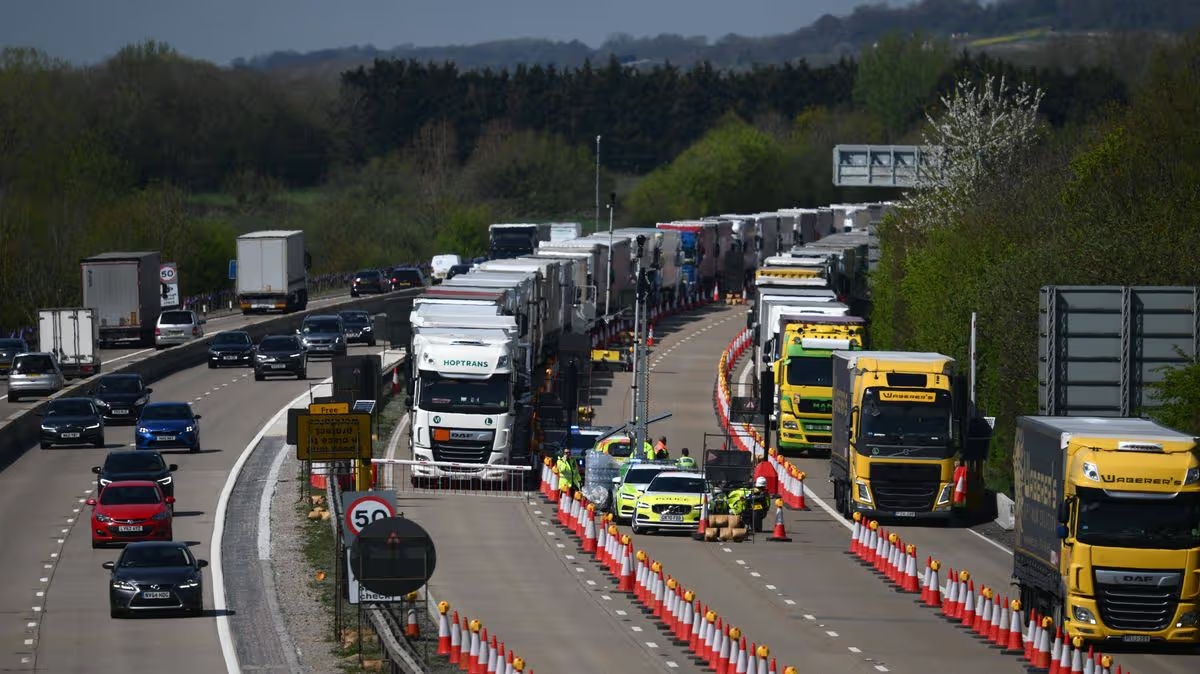
Operation Brock is active on the M20 as of this week. If you are moving freight across the English Channel whether by ferry from Dover or by train through the Eurotunnel at Folkestone this affects your shipment right now. On 17 July 2026, BIFA the British International Freight Association issued an alert confirming that Operation Brock is now deployed and applies to all freight vehicles heading to cross the Channel.
At SARR Logistics, as a BIFA member we take these alerts seriously. This blog explains what Operation Brock is, what is new this summer, and what it means not just for road freight but for any multimodal shipment with a road leg through Kent.
What Is Operation Brock?
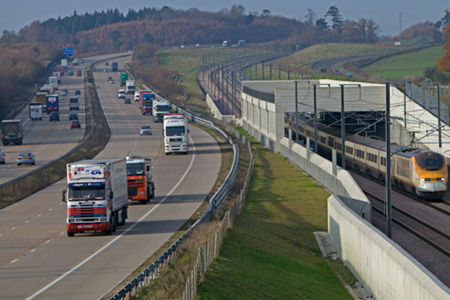
Operation Brock is a contraflow traffic management system based on the M20 motorway in Kent.
It covers a 13 mile stretch of the motorway between Junction 8 at Maidstone and Junction 9 at Ashford.
When Channel crossings are under pressure whether through high passenger volumes, port disruption, or both HGV traffic heading for Dover or the Eurotunnel has historically had nowhere to hold. Without a managed system, freight backs up along the M20, spills onto local roads, and causes serious disruption to communities and businesses across Kent.
Operation Brock solves this by splitting the M20 into two managed lanes using a moveable concrete barrier, installed overnight by specialist teams. One side holds freight vehicles queuing for the port. The other operates as a contraflow, keeping non-port traffic including cars, local deliveries, and vehicles not heading to Europe moving normally in both directions.
The system is activated by the Kent and Medway Resilience Forum based on data and forward intelligence about expected traffic volumes. It is typically deployed during peak summer travel periods, around school holidays, and when Channel crossing bookings reach critical levels. Cross Channel bookings for July and August 2026 are at their highest levels in years, driven by the combination of the summer getaway and continued high demand for European travel.

What Is New This Summer The Permit System
This is the element that directly affects freight operators in a new way, and it is the detail that cannot be overlooked. For the first time this summer, a formal Brock permit system is in operation for all freight vehicles.
When HGVs are held in the Operation Brock queue, drivers are issued a Brock permit specifying which cross Channel operator they are to use either the Port of Dover for ferry services, or Eurotunnel for Le Shuttle.
Here is the critical point. Any vehicle arriving at the port with the wrong permit for example, a Eurotunnel permit arriving at Dover will be turned around.
That is not a minor inconvenience. A vehicle turned around at the port means a missed sailing, a rebooked crossing, additional waiting time in Kent, and knock on delays to delivery at the destination. For time sensitive road freight, the commercial consequences can be significant.
The permit system exists for a good reason. It prevents drivers from attempting to bypass the queue by switching between operators, which causes congestion on local roads around Dover and Folkestone and creates pressure on the Roundhill Tunnel near Folkestone a narrow pinch point that, if closed, causes serious disruption to the surrounding road network.
The permit system keeps freight on the M20 and A20 where it can be managed, and out of the communities it would otherwise flood. Understanding it and planning around it is now a basic requirement for any freight operator using the Dover to Calais or Folkestone to Coquelles route this summer.
What This Means for Road Freight
All transport operators heading to the Channel ports must use the M20. There is no discretion here. EU bound freight must enter Operation Brock at Junction 8 and follow the signed routes to the appropriate crossing.
The practical implications for road freight planning are straightforward. Journey times through Kent will be longer than normal during peak periods. Build contingency time into delivery schedules for any Channel crossing between now and the end of the summer. Drivers must carry awareness of the permit system and understand that the permit they receive in the queue determines which operator they must use regardless of any original booking preference.
Tourist traffic is expected to be exceptionally heavy throughout July and August. Both the Port of Dover and Le Shuttle are reporting high booking numbers, with an increase in tourist traffic from mid July as tens of thousands of passengers set off to Europe during the school holiday season. Freight and passenger vehicles are sharing the same corridor. Plan accordingly.
The Multimodal Dimension
Operation Brock is not only a road freight issue. It affects any shipment where the road leg passes through Kent, and that covers a significant proportion of multimodal freight moving between the UK and Europe.
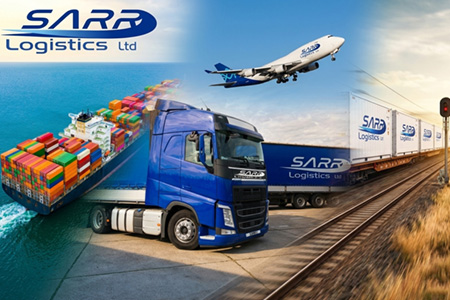
Consider a sea freight container arriving at Felixstowe or London Gateway from Asia or the Americas, destined for a buyer in France, Germany, or the Benelux. The container is collected, loaded onto a trailer, and the vehicle heads south and west through Kent toward Dover or Folkestone. That vehicle joins Operation Brock. The permit system applies. The transit time through Kent is now variable in a way that pre-Brock planning assumptions did not account for.
The same applies in reverse. Air freight arriving at Heathrow with a European road delivery on the final leg. Import cargo collected from Southampton heading to a customer on the continent. Any shipment regardless of how it arrived in the UK that needs a road crossing through Kent is now operating within the Operation Brock environment.
For multimodal supply chains, the lesson is to review the Kent road leg as a distinct planning element in its own right, not just an assumed final step. The variables are real, and they are live right now.
What You Should Do Now
Three things matter most at this moment.
Review any shipments with a planned Channel crossing between now and September. Check whether your transit time assumptions remain realistic given current Operation Brock conditions. If in doubt, add a buffer missed sailings in peak summer are difficult to recover quickly.
Brief your drivers and haulage partners on the permit system. The rule about being turned around for presenting at the wrong port is not widely understood yet. Making sure everyone in your supply chain knows it could save a significant delay.
Speak to your freight forwarder early. At SARR Logistics, we are monitoring the Operation Brock situation in real time and working with clients to build practical contingency into their road and multimodal freight planning.
The earlier we are involved, the more we can do.
For full guidance on Operation Brock and the latest status of the M20 contraflow, you can visit BIFA the British International Freight Association who published their member alert on 17 July 2026, available at bifa.org. or alternativly visit the National Highways site travel updates operation brock.
One Final Thought
![]()
Summer always brings pressure to Channel freight. This year that pressure is higher than it has been in years, and it comes with a new rule that has real commercial teeth. A permit matched to the wrong port means a vehicle turned around. In freight, time is money and a missed crossing in peak summer is rarely a quick fix.
Plan ahead. Brief your team. And if you need support navigating any of this, SARR Logistics is here.
Contact our experienced team at [email protected] or call 0333 224 1 224 to discuss how our comprehensive logistics services support your requirements. We understand that effective protection requires both strategic planning and operational excellence across all freight forwarding disciplines.

FAQ
What is Operation Brock?
Operation Brock is a contraflow traffic management system on the M20 motorway in Kent, covering a 13 mile section between Junction 8 at Maidstone and Junction 9 at Ashford. It is deployed during periods of high Channel traffic to keep freight and other vehicles moving through Kent.
Is Operation Brock active right now?
Yes. As confirmed by BIFA on 17 July 2026, Operation Brock is currently deployed and applies to all freight vehicles heading to cross the Channel.
What is the Brock permit system?
When freight vehicles are held in the Operation Brock queue, drivers are issued a permit specifying which cross Channel operator they must use either the Port of Dover or Eurotunnel. Arriving at the wrong operator with the wrong permit will result in the vehicle being turned around.
Does Operation Brock affect multimodal shipments?
Yes. Any shipment sea freight, air freight, or otherwise that has a road leg transiting Kent to cross the Channel falls within the Operation Brock environment. Transit times through Kent will be longer and less predictable during peak summer periods.
How can SARR Logistics help?
We are monitoring the Operation Brock situation in real time and supporting clients with road and multimodal freight planning through Kent. Call us on 01206 803125 or email [email protected].